
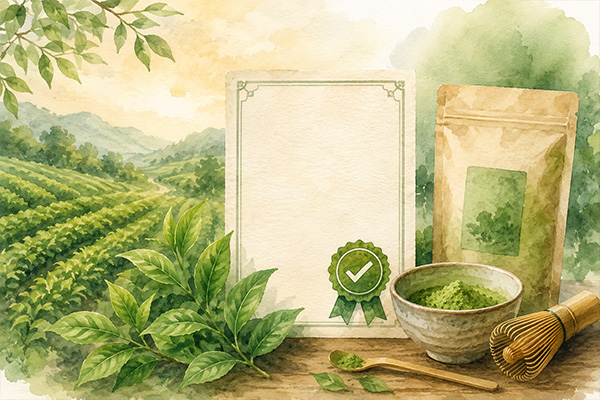
Organic matcha can be a valuable product direction for food and beverage brands, private label companies, cafés, distributors, wellness brands, and organic retailers. It supports a cleaner product positioning and can help brands enter premium or natural-product channels.
But for B2B sourcing, “organic” is not just a marketing word. Organic matcha requires the right certification, traceability, labeling review, and document control. If the certification does not match your target market or product format, your brand may face import delays, labeling problems, or customer compliance questions.
This guide explains what B2B buyers should understand before sourcing organic matcha powder.
What Does Organic Matcha Mean?
Bio-Matcha is matcha powder made from tea leaves produced and processed according to organic standards. In B2B sourcing, this usually means the farm, processing facility, handling process, and sometimes packaging stage must be covered by a recognized organic certification system.
For buyers, organic matcha may be used in:
- Retail matcha pouches
- Organic food and beverage products
- Matcha latte powders
- Café and foodservice programs
- Wellness and functional food products
- Private label matcha brands
- Superfood blends
- Premium-Teesortimente
Organic certification helps support organic labeling and market access, but the exact requirements depend on the destination market.
Why Organic Certification Matters for B2B Buyers
For B2B buyers, organic certification affects much more than the product description.
It can influence:
- Product positioning
- Retail channel access
- Label claims
- Import documents
- Supplier qualification
- Customer trust
- Pricing
- MOQ
- Packaging decisions
A product can only be sold or labeled as organic when it meets the relevant organic rules for the target market. For example, USDA states that organic product labels must be reviewed and approved by a USDA-accredited certifying agent before marketplace use.
In the EU, the organic logo has specific rules. The European Commission explains that the logo is compulsory for most pre-packaged EU-Bio food products and must appear with the control body code and the place where the agricultural raw materials were farmed.
Organic Certification Is Market-Specific
One common mistake is assuming that one organic certificate works everywhere. In reality, organic certification is connected to the market where the product will be sold.
United States: USDA Organic
If your product will be sold as organic in the United States, USDA Organic is usually the key standard to review. The USDA National Organic Program develops rules for production, handling, labeling, and enforcement of USDA organic products.
For private label buyers, the label should be reviewed before printing because organic wording and logo use must follow USDA rules.
European Union: EU Organic
For the EU market, buyers should check EU organic requirements, control body code, origin statement, and import documentation. The EU organic logo must be used according to specific rules, including displaying the control body code and farming origin statement.
For organic imports, the EU uses TRACES, an online platform for certification related to imports and certain food and plant-related controls.
Japan: Organic JAS
For Japan, Organic JAS may be required if the product will be marketed as organic. MAFF explains that the Organic JAS logo can only be applied by registered business entities certified by an accredited certification body.
Other Markets
Canada, the UK, Australia, the Middle East, and other regions may have their own organic recognition rules, import requirements, or label expectations. Before launching an organic matcha product, buyers should check with a local importer, certifier, or regulatory consultant.
Organic Matcha Documents Buyers Should Request
Organic matcha sourcing should be supported by a complete document set. Do not rely on the word “organic” in a quotation alone.
Basic document set
| Document | What It Helps Confirm |
|---|---|
| Organic certificate | Whether the supplier, product, or facility is certified |
| COA | Batch quality and test information |
| Product specification sheet | Product standard, grade, physical description |
| Transaction certificate or import certificate, if required | Organic movement or import control |
| Label approval, if applicable | Organic logo and claim compliance |
| Packing list | Shipment quantity and carton details |
| Commercial invoice | Export and customs information |
| Certificate of origin, if required | Origin information for customs or buyer review |
| Shelf life statement | Product freshness and storage planning |
| Storage instructions | Handling requirements for matcha powder |
H4: What to check on an organic certificate
Before accepting an organic certificate, check:
Certificate holder name
Certifying body name
Product scope
Facility or handling scope
Certificate validity date
Standard covered, such as USDA Organic, EU Organic, or JAS
Product category
Whether matcha powder is clearly included
Whether the supplier name matches your transaction
If the certificate only covers raw tea leaves but not processing, handling, or packaging, ask the supplier to clarify.
Organic Matcha vs Conventional Matcha: What Changes for Buyers?
Organic matcha is not simply a higher-priced version of conventional matcha. It changes sourcing, documentation, label planning, and sometimes supply flexibility.
| Gebiet | Conventional Matcha | Bio-Matcha |
|---|---|---|
| Certification | Usually not required for organic claims | Certification is required for organic labeling |
| Price | Usually lower | Usually higher due to certification and traceability |
| MOQ | Often more flexible | May depend on certified raw material availability |
| Dokumente | COA and specification may be enough for many buyers | Organic certificate and possibly transaction documents needed |
| Kennzeichnung | Standard food label requirements | Organic claims and logo use must follow market rules |
| Lieferung | Wider grade options | Certified grade options may be more limited |
| Brand positioning | Broad commercial use | Premium, organic, natural, clean-label channels |
Organic matcha may be valuable when your target customers actively look for organic products. For applications where organic positioning is not essential, conventional matcha may offer better cost control.
Certification Scope Matters More Than the Logo
A logo alone does not tell the whole story. B2B buyers should review the certification scope.
For example, a supplier may show an organic certificate, but buyers still need to confirm whether it covers:
- The correct company
- The correct product
- The correct processing site
- The correct packaging or handling process
- The standard required by the target market
- The current validity period
- The transaction or shipment, if required
H4: Questions to ask the supplier
Which organic standard does this product meet?
Is the certificate valid for matcha powder or only tea leaves?
Does the certificate cover processing and packaging?
Can you provide transaction documentation if required?
Can this product use the organic logo in my target market?
Does private label packaging need separate approval?
For private label projects, certification scope becomes especially important because the finished product may be packed under your brand name.
Organic Claims and Labeling: Be Careful Before Printing
Organic labeling is one of the most common risk areas in private label matcha projects.
A buyer may want to print words such as:
Bio-Matcha
100% Organic Matcha
Certified Organic
USDA Bio
EU-Bio
Organic Japanese Matcha
Organic Green Tea Powder
Before using these words, confirm whether the claim is allowed in your target market and whether the product’s certification supports it.
What to review before printing
| Label Element | Buyer Check |
|---|---|
| Product name | Does it correctly describe the certified product? |
| Organic logo | Is the logo allowed for this market and product? |
| Certification body | Is the correct certifier or control body shown? |
| Origin statement | Is the farming origin correct? |
| Ingredient statement | Is the product 100% matcha or a blend? |
| Nutrition panel | Does the format fit the destination market? |
| Importer details | Required for some markets |
| Claims | Avoid unsupported or exaggerated claims |
For U.S. products, USDA organic labels must be reviewed and approved by a USDA-accredited certifying agent before marketplace use. For EU products, the organic logo must be accompanied by the control body code and farming origin statement.
How Organic Certification Affects MOQ and Cost
Organic matcha usually costs more than conventional matcha because certification and traceability add extra control steps.
Cost factors may include:
- Certified organic raw material
- Separate handling or storage
- Organic audit and certification cost
- Documentation management
- Traceability control
- Organic packaging or label review
- Transaction certificates or import documents when required
- Smaller certified batch availability
MOQ factors may include:
- Certified raw material availability
- Grade availability
- Packaging format
- Private label production
- Organic document requirements
- Whether the supplier can combine orders
For new private label brands, starting with one organic matcha product may be more practical than launching several SKUs at once.
Organic Matcha for Different B2B Applications
Organic matcha is not suitable only for premium tea brands. It can support several B2B product strategies.
Organic retail matcha
Best for private label brands, organic food stores, and e-commerce sellers. Focus on certification, packaging, taste, color, and label clarity.
Organic matcha latte powder
Best for cafés, beverage brands, and wellness drinks. Focus on milk compatibility, flavor balance, organic ingredient compatibility, and cost per serving.
Organic matcha for food manufacturing
Best for bakery, dessert, chocolate, and packaged food brands. Focus on color performance, heat stability, documentation, and bulk packaging.
Organic matcha for wellness brands
Best for superfood blends, functional powders, sachets, and clean-label product concepts. Focus on ingredient story, document control, and safe claim language.
Organic matcha for distributors
Best for wholesalers serving organic retailers, cafés, and food manufacturers. Focus on repeat supply, carton labeling, certificate validity, and product range.
Organic Matcha Buyer Checklist
Use this checklist before confirming an organic matcha order.
| Gebiet | Was ist zu überprüfen? |
|---|---|
| Zielmarkt | U.S., EU, Japan, UK, Canada, Middle East, or other market |
| Certification standard | USDA Organic, EU Organic, JAS, or other required standard |
| Certificate holder | Supplier, manufacturer, processor, or handler |
| Product scope | Matcha powder is clearly covered |
| Validity | Certificate is current |
| Processing scope | Processing and handling are covered if needed |
| Packaging scope | Private label packing is covered or clarified |
| Label use | Organic wording and logo use are allowed |
| Import documents | Transaction or import certificate if required |
| Batch documents | COA, specification sheet, lot information |
| MOQ | Powder MOQ and packaging MOQ |
| Kosten | Product cost, certification-related cost, packaging cost |
| Supply stability | Certified raw material availability for repeat orders |
Common Mistakes When Sourcing Organic Matcha
Mistake 1: Assuming “organic” means the same thing in every market
USDA Organic, EU Organic, and Organic JAS are not always interchangeable. Always confirm your target market requirements.
Mistake 2: Checking the logo but not the certificate scope
A logo is not enough. The certificate should clearly cover the product, supplier, and relevant process.
Mistake 3: Printing packaging before organic label review
Organic logos and claims should be reviewed before packaging production. Reprinting packaging can be expensive.
Mistake 4: Ignoring transaction documents
For some markets or customers, organic movement or import documents may be required in addition to the certificate.
Mistake 5: Choosing organic matcha only for marketing
Organic certification supports positioning, but the product still needs to perform well in taste, color, application, and repeat supply.
Mistake 6: Launching too many organic SKUs too early
Organic products may have higher MOQ and cost. A focused first launch is often more practical.
How MatchaOEMFactory Supports Organic Matcha Projects
MatchaOEMFactory supports B2B buyers with organic matcha sourcing, grade recommendation, sample testing, packaging planning, and document support.
We help customers clarify:
- Which organic matcha grade fits the application
- What certification documents are available
- Whether the product suits retail, café, food manufacturing, or Eigenmarke use
- How organic packaging and label planning should be organized
- What MOQ and lead time apply to organic projects
- What documents may be needed before shipment
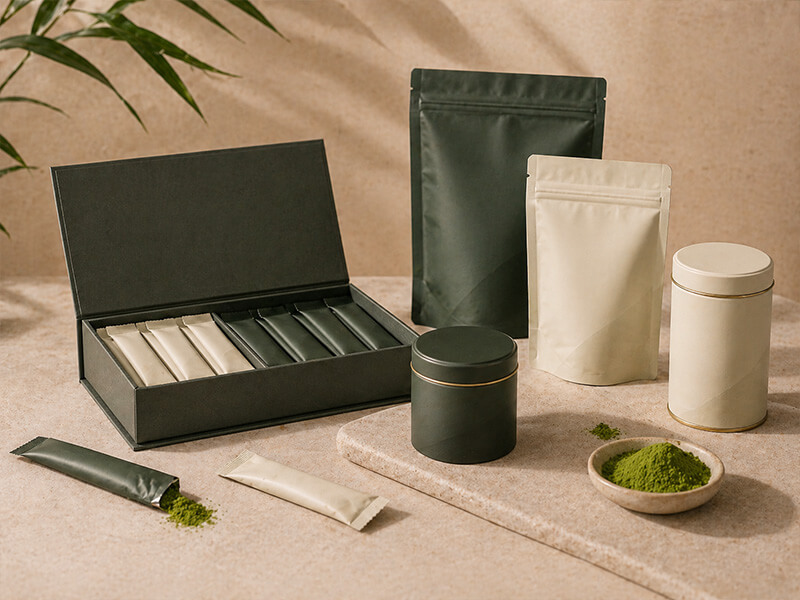
Our team can support organic matcha projects for private label brands, distributors, cafés, food and beverage companies, and wellness product developers.
Häufig gestellte Fragen
What organic certification should I request for matcha?
It depends on your target market. For the U.S., USDA Organic is usually the key standard. For Europe, EU Organic is important. For Japan, Organic JAS may be required.
Can I use the USDA Organic logo on private label matcha?
Only if the product, handling, and label meet USDA requirements and the label is reviewed and approved by a USDA-accredited certifying agent before marketplace use.
Is EU Organic certification the same as USDA Organic?
They are different systems, though equivalence arrangements may apply in some trade situations. Buyers should confirm their market and product requirements before labeling.
Does organic matcha always cost more?
Usually yes. Organic matcha can cost more because of certified raw material, traceability, audits, separate handling, and document management.
What documents do I need for organic matcha?
Common documents include organic certificate, COA, specification sheet, shelf life statement, packing list, commercial invoice, and transaction or import certificate if required.
Can organic matcha be used in blends?
Yes, but if you want the finished blend to be labeled organic, all relevant ingredients, processing, and labeling rules must be reviewed for your target market.
Ready to Source Certified Organic Matcha?
Organic matcha sourcing requires more than choosing a green powder. You need the right certification, document support, grade selection, packaging plan, and label review for your target market.
MatchaOEMFactory helps B2B buyers source organic matcha for private label products, cafés, distributors, food manufacturing, and wellness brands.
Share your target market, application, expected quantity, and packaging needs. Our team can help you compare organic matcha options, arrange samples, and prepare a tailored quotation.