
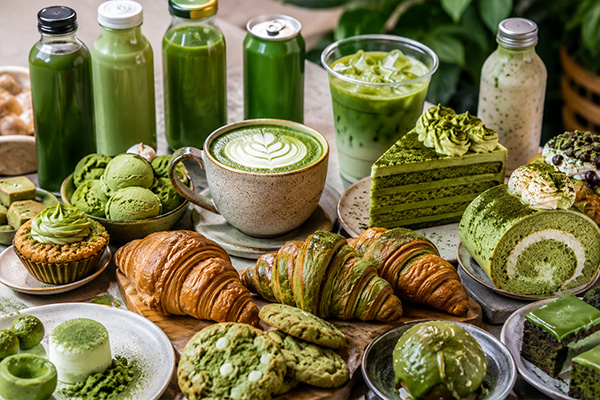
Matcha is no longer used only in traditional tea preparation or café lattes. For food and beverage brands, it has become a flexible commercial ingredient that can bring natural green color, recognizable tea flavor, premium positioning, and strong product differentiation.
Today, matcha is widely used in ready-to-drink beverages, bakery products, desserts, ice cream, chocolate, powdered mixes, and private label food products. However, using matcha successfully in commercial products requires more than adding green tea powder into a formula. Brands need to understand how matcha behaves in liquid systems, baked products, dairy-based desserts, frozen products, and high-fat formulas.
This guide explains how food and beverage brands can use matcha in RTD drinks, bakery, and desserts, and what B2B buyers should consider before choosing a matcha grade for commercial production.
Why Matcha Works Across Drinks, Bakery and Desserts
Matcha is attractive for product development because it contributes more than one function. It is not just a flavoring ingredient. It can also influence product color, texture, brand positioning, and consumer perception.
For food and beverage brands, matcha can help create products that feel:
- Premium
- Natural
- Plant-based
- Tea-inspired
- Asian-inspired
- Clean-label friendly
- Visually distinctive
- Suitable for café-style or wellness-style positioning
Unlike many flavor powders, matcha has a strong visual identity. Its green color helps products stand out in bottles, bakery displays, dessert counters, e-commerce photos, and retail shelves.
This makes matcha especially useful for brands developing:
- RTD matcha latte drinks
- Matcha-Getränke mit Hafermilch
- Matcha powder drink mixes
- Matcha cookies and cakes
- Matcha pastries and fillings
- Matcha ice cream and gelato
- Matcha pudding and mousse
- Matcha chocolate and confectionery
- Private label dessert or beverage products
For broader application planning, this topic can connect with Matcha for Food & Beverage Brands, Culinary Matcha, and Latte Grade Matcha.
Matcha in Ready-to-Drink Beverages
Ready-to-drink matcha products are attractive because they offer convenience. Consumers do not need to whisk matcha powder themselves; they can simply open a bottle, can, or carton and drink.
However, RTD matcha beverages are technically more challenging than café drinks because the product must remain stable after production, filling, shipping, and storage.
Common RTD Matcha Product Concepts
Food and beverage brands can use matcha in many RTD formats:
| RTD Product Type | Product Example | Key Development Focus |
|---|---|---|
| Milk-based matcha latte | Bottled matcha latte | Color, dairy balance, sweetness, sediment |
| Plant-based matcha drink | Oat milk matcha latte | Plant milk compatibility, mouthfeel, flavor balance |
| Clear matcha drink | Matcha green tea beverage | Bitterness, clarity, color stability |
| Functional beverage | Matcha protein drink or energy drink | Ingredient compatibility, taste masking |
| Sparkling drink | Sparkling matcha lemonade | Acidity, color, sediment, flavor balance |
| Powder-to-RTD concept | Matcha drink base for filling | Bulk formula stability and production efficiency |
Different RTD formats require different matcha performance. A matcha powder that works well in a café latte may not automatically work in a bottled drink.
Key Challenges in RTD Matcha Development
RTD matcha products require careful testing because matcha can be sensitive to formula conditions and processing.
Sedimentation
Matcha is a fine powder, but it is not fully soluble in the same way as sugar or salt. In RTD beverages, sediment can become visible at the bottom of the bottle or carton.
Brands should test:
- Particle size
- Suspension stability
- Mixing process
- Stabilizer system
- Bottle storage time
- Shake-before-drinking instructions
For some RTD products, a small amount of natural sediment may be acceptable if the label and product concept allow it. For others, visible sediment may create a negative consumer experience.
Color Stability
Matcha color can be affected by light, oxygen, heat, acidity, and storage time. In RTD products, this is especially important because customers often judge product quality visually.
Brands should test color after:
- Heat treatment
- Filling
- Refrigerated storage
- Ambient storage
- Light exposure
- Shelf-life simulation
A bright dry powder does not guarantee a bright finished beverage. The actual formula matters.
Flavor Balance
Matcha naturally has green tea, grassy, umami, and slightly bitter notes. In RTD drinks, this flavor needs to be balanced with milk, plant-based milk, sweeteners, flavors, or functional ingredients.
A good RTD matcha formula should avoid:
- Excessive bitterness
- Weak tea flavor
- Chalky mouthfeel
- Stale aroma
- Strong grassy aftertaste
- Flavor conflict with protein, dairy, or fruit
Heat and Processing Conditions
If the beverage requires pasteurization, sterilization, or other heat treatment, matcha performance must be tested under real processing conditions.
Heat may affect:
- Color brightness
- Aroma
- Bitterness
- Sediment
- Ingredient interaction
For RTD brands, pilot testing is essential before bulk purchasing.
Choosing Matcha for RTD Drinks
RTD beverages usually need matcha with good color, stable taste, controlled bitterness, and fine texture.
Latte Grade Matcha for Milk-Based RTD Drinks
Matcha in Latte-Qualität is often suitable for:
- Bottled matcha latte
- Oat milk matcha latte
- Coconut matcha drink
- Matcha milk tea
- Café-style RTD beverages
This grade can provide enough flavor strength to stand out in milk while maintaining practical cost control.
Culinary Grade Matcha for Stronger Formula Applications
Matcha in Lebensmittelqualität may be used in some beverage applications when stronger flavor, cost efficiency, or blending performance is more important than delicate drinking quality.
It may be suitable for:
- Sweetened RTD drinks
- Blended beverages
- Functional drink concepts
- Matcha powder bases
- Products where matcha is one of several ingredients
Organic Matcha for Premium RTD Products
Bio-Matcha may be useful for brands targeting organic, natural, clean-label, or premium channels. However, it usually requires more document planning and higher cost control.
Suggested internal links:
Latte Grade Matcha
Bio-Matcha
So wählen Sie die richtige Matcha-Qualität für Ihr Produkt aus
Matcha in Bakery Products
Matcha works well in bakery because it adds both color and flavor. It can make baked goods look unique and help brands create tea-inspired product lines.
Common bakery applications include:
- Matcha-Kekse
- Matcha cakes
- Matcha muffins
- Matcha bread
- Matcha croissants
- Matcha pastries
- Matcha cream fillings
- Matcha cake rolls
- Matcha brownies
- Matcha waffles
Bakery applications are different from drinks because matcha must survive mixing, heating, fat, sugar, and sometimes long display time.
Key Challenges in Matcha Bakery Products
Wärmebeständigkeit
Baking can change matcha color and flavor. A powder that looks bright before baking may become dull after heat exposure.
Brands should test:
- Oven temperature
- Baking time
- Matcha dosage
- Formula pH
- Fat level
- Sugar level
- Final product color after cooling
For bakery brands, color after baking matters more than dry powder color.
Flavor Strength
Bakery formulas usually contain flour, butter, sugar, eggs, cream, or other strong ingredients. If the matcha flavor is too weak, the final product may only look green but lack a real matcha taste.
Culinary grade matcha is often suitable because it has stronger flavor and better cost efficiency for baked products.
Color Distribution
Matcha needs to be evenly dispersed in dough, batter, cream, or filling. If the powder is not mixed well, the product may show uneven green spots or weak color.
Brands should check:
- Powder fineness
- Pre-mixing method
- Mixing time
- Dry ingredient blending
- Formula moisture level
Cost per Finished Product
Bakery products often use matcha at different dosage levels depending on the desired flavor and color. Brands should calculate matcha cost per cookie, cake, pastry, or dessert unit rather than only price per kilogram.
Choosing Matcha for Bakery
For most bakery applications, culinary grade matcha is the most practical choice. It offers stronger flavor, visible color, and better cost control compared with higher drinking grades.
Culinary Matcha Works Well For
| Bakery Product | Matcha Requirement |
| Cookies | Strong flavor and visible green color |
| Kuchen | Good color distribution and balanced taste |
| Gebäck | Stable color in fillings or dough |
| Brot | Stronger dosage and heat stability |
| Cream filling | Smooth texture and bright color |
| Dessert toppings | Fine powder and attractive color |
When to Use Latte Grade in Bakery
Latte grade may be used for premium bakery products where brighter color or smoother flavor is needed. However, it may increase cost.
When Not to Use Ceremonial Grade
Ceremonial matcha is usually not necessary for most baked goods. Its delicate taste can be hidden by heat, sugar, butter, and flour. For bakery production, paying for ceremonial grade may not provide enough commercial value unless the product is positioned as premium and low-volume.
Suggested internal links:
Culinary Matcha
What Color Should Good Matcha Powder Be?
How Matcha Processing Affects Color, Flavor and Cost
Matcha in Desserts
Desserts are one of the strongest categories for matcha because sweetness, creaminess, and dairy or plant-based bases can balance matcha’s natural bitterness.
Common dessert applications include:
- Matcha ice cream
- Matcha gelato
- Matcha pudding
- Matcha mousse
- Matcha cheesecake
- Matcha tiramisu-style desserts
- Matcha cream desserts
- Matcha dessert cups
- Matcha chocolate
- Matcha truffles
- Matcha custard
- Matcha whipped cream
Desserts allow brands to use matcha as both a flavor and a visual feature.
Key Challenges in Matcha Dessert Development
Fat Compatibility
Many desserts contain cream, butter, chocolate, or milk fat. Matcha needs to disperse well in these systems to avoid graininess or uneven flavor.
Fine powder is especially important for:
- Eiscreme
- Mousse
- Cremefüllungen
- Schokolade
- Pudding
- Käsekuchen
Bitterness Control
Sweetness can balance matcha’s bitterness, but too much matcha or the wrong grade may still create a harsh aftertaste.
Brands should test:
- Matcha dosage
- Sugar level
- Dairy or plant-based base
- Flavor pairing
- Storage time
- Serving temperature
Freezing and Cold Storage
For ice cream and frozen desserts, flavor perception changes after freezing. Matcha may taste weaker or more bitter depending on the formula.
Brands should test finished products after freezing, not only before freezing.
Shelf Display
Desserts displayed in shops or retail packaging may be exposed to light or air. This can affect surface color and freshness. Packaging and display conditions should be considered.
Choosing Matcha for Desserts
The right matcha for desserts depends on the dessert type.
| Dessert Type | Empfohlene Zubereitung von Matcha | Key Focus |
| Ice cream / gelato | Für kulinarische Zwecke oder für Latte | Dairy compatibility and smooth texture |
| Mousse / pudding | Latte oder in Lebensmittelqualität | Fine texture and balanced bitterness |
| Käsekuchen | Lebensmittelqualität | Flavor strength and color |
| Schokolade | Fine culinary grade | Fat compatibility and smooth mouthfeel |
| Dessert toppings | Latte oder in Lebensmittelqualität | Bright color and fine powder |
| Premium dessert products | Latte or ceremonial grade | Higher-end taste and appearance |
For most commercial dessert applications, culinary or latte grade matcha is more practical than ceremonial grade.
Formula Factors That Affect Matcha Performance
Matcha behaves differently depending on the product system. Food and beverage brands should not evaluate matcha only as a dry ingredient.
Milk and Plant-Based Milk
Milk softens bitterness but may reduce green brightness. Oat milk can add sweetness and body, while coconut milk can change aroma.
Sugar and Sweeteners
Sugar can make matcha more approachable, especially in desserts and RTD drinks. However, high sweetness may hide low matcha flavor, so dosage should be adjusted carefully.
Fat
Fat can affect flavor release and powder dispersion. In chocolate, cream, and ice cream, matcha fineness becomes more important.
Acidity
Acidic products such as lemonade or fruit beverages can affect color and taste. Matcha should be tested carefully in acidic systems.
Heat
Baking or heat treatment may reduce color brightness and change aroma. Brands should evaluate finished products, not only raw mixtures.
Oxygen and Light
Matcha can lose freshness when exposed to oxygen and light. Packaging and processing control are important for both powder and finished products.
Application Testing Plan for B2B Brands
Before ordering bulk matcha, brands should run application-specific tests.
RTD Drink Testing
Test:
- Color after processing
- Sedimentation after storage
- Taste after refrigeration or ambient storage
- Compatibility with milk or plant-based milk
- Sweetness and bitterness balance
- Packaging light exposure
Bakery Testing
Test:
- Dough or batter color
- Final baked color
- Matcha flavor after heating
- Powder distribution
- Texture impact
- Shelf display performance
Dessert Testing
Test:
- Smoothness in cream or dairy base
- Color after chilling or freezing
- Bitterness after storage
- Flavor balance with sugar and fat
- Surface color after display
Powder Blend Testing
If your product is a dry mix, test:
- Powder flow
- Clumping
- Reconstitution
- Moisture sensitivity
- Flavor balance
- Packaging barrier performance
Matcha Grade Selection by Application
| Anmeldung | Best Matcha Direction | Why |
| RTD milk matcha | Latte-Qualität | Better milk performance and flavor balance |
| RTD oat milk matcha | Latte-Qualität | Works well in creamy plant-based drinks |
| Clear matcha drinks | Latte or selected culinary grade | Needs careful bitterness and color control |
| Cookies and cakes | Lebensmittelqualität | Strong flavor and heat performance |
| Pastries and fillings | Für kulinarische Zwecke oder für Latte | Color, smooth texture, and flavor strength |
| Eiscreme | Für kulinarische Zwecke oder für Latte | Dairy compatibility and balanced taste |
| Schokolade | Fine culinary grade | Smoothness and fat compatibility |
| Premium desserts | Latte or ceremonial grade | Better taste and presentation |
| Organic product line | Bio-Matcha | Certification and premium positioning |
This table should guide sample selection, but final decisions should be based on testing.
Product Development Case Example 1: RTD Oat Milk Matcha Latte
A beverage brand wanted to launch an oat milk matcha latte for retail. The first sample looked bright as a dry powder, but the finished drink appeared weak after mixing with oat milk.
The development team tested several latte-grade matcha options and adjusted the matcha dosage, sweetness, and mixing process.
The final product needed:
- Good color in oat milk
- Smooth mouthfeel
- Controlled bitterness
- Low sediment
- Stable taste after storage
- Practical cost per bottle
This case shows why RTD brands should test matcha inside the real beverage formula before selecting a bulk grade.
Product Development Case Example 2: Matcha Cookies and Cakes
A bakery brand wanted to create matcha cookies and cake rolls. The team first tested a smooth drinking-grade matcha, but after baking, the color faded and the flavor became too mild.
The supplier recommended testing culinary-grade matcha with stronger flavor and better performance under heat.
After several formula trials, the bakery selected one culinary-grade matcha that worked across:
- Cookies
- Sponge cakes
- Cremefüllungen
- Seasonal pastries
Using one suitable grade across several products helped the brand simplify purchasing and control cost.
Product Development Case Example 3: Matcha Ice Cream
An ice cream brand wanted a matcha flavor that tasted rich but not too bitter. The challenge was that matcha flavor became less noticeable after freezing.
The team tested matcha in the full dairy base and evaluated the final frozen product, not just the liquid mix.
Important adjustments included:
- Matcha dosage
- Sugar level
- Cream content
- Mixing time
- Freezing impact
- Final serving temperature
The selected matcha had enough flavor strength to remain clear after freezing while maintaining a smooth texture.
Product Development Case Example 4: Matcha Dessert Cup
A dessert brand wanted to create a layered matcha dessert cup with cream, cake, and pudding. The product needed an attractive green color and smooth taste.
The matcha had to work in multiple layers:
- Matcha cream
- Matcha sponge layer
- Matcha pudding
- Matcha powder topping
Instead of using one grade blindly, the brand tested culinary grade for baked sponge and latte grade for cream and topping. This helped balance cost and appearance.
Commercial Production Checklist
Before moving from sample testing to bulk production, brands should confirm the following:
| Gebiet | Was ist zu überprüfen? |
| Anmeldung | RTD, bakery, dessert, ice cream, chocolate, or powder mix |
| Matcha-Qualität | Latte, kulinarisch, zeremoniell oder biologisch |
| Formula testing | Tested in the real product system |
| Processing impact | Heat, freezing, acidity, fat, or storage effect |
| Farbe | Final product color after processing |
| Geschmack | Bitterness, sweetness, aroma, aftertaste |
| Textur | Smoothness, sediment, clumping, dispersion |
| Kosten | Cost per bottle, serving, cookie, scoop, or unit |
| Verpackung | Powder packaging and finished product packaging |
| Dokumente | COA, specification, shelf life, certification if needed |
| Scale-up | Pilot batch performance before mass production |
| Repeat supply | Same grade availability for future orders |
Common Mistakes Brands Should Avoid
Mistake 1: Testing Matcha Only in Water
Water testing is useful, but it does not show how matcha performs in RTD drinks, baked goods, ice cream, cream, or chocolate.
Mistake 2: Choosing the Brightest Dry Powder
The final product matters more than the dry powder. Always check color after processing.
Mistake 3: Using One Grade for Every Application
RTD drinks, bakery, and desserts may require different grades. One matcha is not always suitable for every product.
Mistake 4: Ignoring Sedimentation in Beverages
RTD products need stability testing. Sediment can affect consumer perception.
Mistake 5: Forgetting Heat Stability
Bakery brands should test matcha after baking, not only in raw batter.
Mistake 6: Underestimating Packaging
Matcha powder needs protection before production, and finished products may also need protection from light and oxygen.
Mistake 7: Not Calculating Cost per Finished Unit
Bulk price per kilogram is only one factor. Cost per bottle, pastry, dessert cup, or scoop is more useful for product planning.
How MatchaOEMFactory Supports RTD, Bakery and Dessert Brands
MatchaOEMFactory helps food and beverage brands use matcha in commercial product development and bulk production.
Wir unterstützen Marken mit:
- Latte-grade matcha for milk-based drinks and RTD beverages
- Culinary-grade matcha for bakery, desserts, chocolate, and ice cream
- Ceremonial matcha for premium product concepts
- Organic matcha for clean-label and organic product lines
- Matcha-Großmengenproben für Rezepturtests
- Application-based grade recommendations
- Unterstützung bei der Herstellung individueller Matcha-Mischungen
- Verpackungsoptionen für Eigenmarken
- Unterstützung bei Konformitätsbewertung und Spezifikationen
- Mindestbestellmenge und Kostenplanung
- Unterstützung bei Nachbestellungen
- Exportfähige Dokumentation
Our team can help you choose matcha based on real product performance, not only powder appearance. Whether you are developing a bottled matcha drink, bakery product, frozen dessert, chocolate, or private label product line, we can recommend suitable matcha options and support your sourcing process.
Häufig gestellte Fragen
What matcha grade is best for RTD drinks?
Latte grade matcha is often suitable for milk-based RTD drinks and oat milk matcha beverages because it offers good color, taste, and milk compatibility. Some formulas may also use selected culinary grade matcha depending on cost and flavor needs.
What matcha grade is best for bakery?
Culinary grade matcha is usually the most practical choice for bakery because it provides stronger flavor, better cost control, and better performance in baked products.
Can I use the same matcha for RTD drinks and desserts?
Sometimes, but not always. RTD drinks, desserts, bakery, and chocolate have different processing conditions. It is better to test samples in each product system.
Why does matcha color fade in baked products?
Heat, formula pH, oxidation, and ingredient interactions can affect matcha color. Bakery brands should test final baked products instead of judging only dry powder color.
How can brands reduce sediment in RTD matcha drinks?
Brands should test powder fineness, mixing process, stabilizer systems, and storage conditions. Sedimentation should be evaluated during pilot testing.
Does MatchaOEMFactory support sample testing?
Yes. MatchaOEMFactory can provide matcha samples for application testing and help brands compare grades for RTD drinks, bakery, desserts, ice cream, chocolate, and private label products.
Ready to Develop Matcha Products for RTD, Bakery or Desserts?
Matcha can help food and beverage brands create products with strong visual appeal, distinctive flavor, and premium market positioning. But successful development depends on choosing the right grade, testing it in the real formula, and working with a supplier who understands commercial applications.
MatchaOEMFactory supports RTD beverage brands, bakery companies, dessert manufacturers, and private label food brands with bulk matcha supply, grade recommendations, samples, packaging options, and export-ready documentation.
Share your product concept, target market, expected quantity, and application requirements. Our team can help you compare matcha grades and prepare a tailored quotation for your project.