
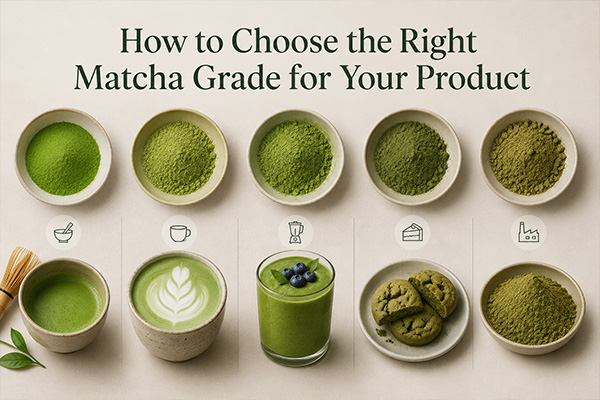
Choosing the right matcha grade is a critical step for B2B buyers sourcing matcha for cafés, beverage brands, food manufacturers, private label brands, or supplement companies. Matcha grade affects color, flavor, aroma, texture, price, and how well the powder performs in your specific application. Selecting the wrong grade can impact product quality, consistency, and even customer perception.
This guide explains the differences between ceremonial, latte, culinary, and ingredient-grade matcha, and provides practical advice for evaluating which grade is suitable for your products.
Why Matcha Grade Matters for B2B Applications
Not all matcha is created equal. Each grade is designed for a specific purpose:
- Ceremonial Grade: Best for traditional tea, high-end retail products, or premium beverage experiences. Smooth, delicate flavor, fine texture, bright color.
- Latte Grade: Optimized for milk-based drinks, lattes, smoothies, and café menus. Balanced flavor that blends well with dairy and plant-based milks.
- Culinary Grade: Ideal for baking, desserts, ice cream, chocolate, and food products. Strong flavor and color that holds up under heat and mixing.
- Ingredient Grade: Designed for bulk formulations, functional food blends, or supplements. Cost-effective, with functional color and flavor properties suitable for large-scale production.
Selecting the appropriate grade ensures your products meet your desired flavor profile, visual appeal, and cost targets. Using the wrong grade may result in a product that is too bitter, lacks color, or is inconsistent across batches.
Step 1: Match Grade to Your Application
Cafés and Beverage Shops
- Best Choice: Latte Grade
- Key Considerations: Color retention in hot and iced drinks, flavor balance, milk compatibility, aroma
- Why: Customers expect vibrant color and smooth taste; ceremonial matcha may be too expensive for daily beverages
Retail or Premium Products
- Best Choice: Ceremonial Grade
- Key Considerations: Bright green color, smooth flavor, premium feel, consumer perception
- Why: High-end retail consumers notice taste and visual quality, and are willing to pay more
Bakery and Desserts
- Best Choice: Culinary Grade
- Key Considerations: Color stability during baking, strong flavor, cost efficiency
- Why: Culinary-grade matcha retains color and taste after heat exposure, making it ideal for baked goods and desserts
RTD Beverages and Powdered Formulations
- Best Choice: Ingredient Grade or Latte Grade
- Key Considerations: Solubility, mixability, color stability, batch consistency
- Why: Functional drinks and ready-to-drink products require reliable performance at scale
Supplements and Functional Foods
- Best Choice: Ingredient Grade
- Key Considerations: Batch consistency, purity, compliance with specifications, cost efficiency
- Why: Large-scale blends need predictable functional and nutritional performance without overpaying for premium sensory quality
Step 2: Evaluate Visual and Sensory Indicators
When comparing matcha grades, assess:
- Color: Bright green indicates younger leaves and proper shading. Latte and culinary grades may be slightly darker due to cost-effective leaf selection.
- Texture: Finer powders dissolve more easily and give smoother beverages or blends.
- Aroma: Ceremonial matcha should be fresh and vegetal. Culinary or ingredient-grade may have stronger flavor notes suitable for recipes.
- Taste: Umami-rich for ceremonial, balanced for latte, strong for culinary. Ingredient-grade focuses on functional use rather than delicate flavor.
Testing samples in your intended application—be it latte, bakery, or powder mix—is essential before committing to bulk orders.
Step 3: Consider Cost vs Quality
Price usually increases with grade:
| Grade | Typical Cost Range | Application |
|---|---|---|
| Ceremonial | High | Premium drinks, retail, gifting |
| Latte | Medium-High | Milk-based drinks, cafés |
| Culinary | Medium | Baking, desserts, food products |
| Ingredient | Medium-Low | Functional foods, supplements, RTD blends |
Choosing a grade appropriate for your application allows you to optimize cost without compromising product quality. Overpaying for ceremonial matcha in a latte may unnecessarily increase expenses.
Step 4: Batch Consistency and Supplier Practices
A high-grade matcha loses value if batch consistency is poor. Before ordering:
- Check supplier documentation (COA, specification sheet)
- Request samples from the actual production batch
- Confirm moisture content, fineness, and aroma stability
- Ask about seasonal variation and sourcing origin
Reliable suppliers can guarantee repeatable quality for your grade choice, ensuring consistency in drinks, food, or private label products.
Step 5: Plan for Packaging and Storage
Different grades may have different storage and packaging requirements:
- Ceremonial grade often requires airtight, light-proof packaging to preserve color and aroma
- Latte grade should maintain consistency and ease of use in cafés
- Culinary grade may be packed in bulk bags suitable for food manufacturing
- Ingredient grade can be shipped in larger volumes for cost efficiency
Understanding grade-specific packaging helps avoid waste and maintains product quality during shipping and storage.
Step 6: Align Grade with Brand Positioning
Your chosen matcha grade should match your brand and target market:
- Premium cafés and luxury retail: ceremonial grade
- Daily-use beverages or chain cafés: latte grade
- Functional food or large-scale food production: culinary or ingredient grade
- Private label brands: choose a grade that balances price, quality, and application to meet customer expectations
Selecting a grade that aligns with your brand perception reinforces consumer confidence and supports marketing claims.
Common Mistakes When Choosing Matcha Grade
- Choosing the highest grade by default: Expensive matcha may not perform well in milk-based drinks or baking and can inflate cost unnecessarily.
- Ignoring the application: Ceremonial matcha is delicate; ingredient-grade is functional—use each grade where it is appropriate.
- Skipping sample testing: Even the right grade must be tested in your actual product environment.
- Neglecting batch consistency: A visually attractive grade may vary across batches if the supplier lacks proper control.
- Overlooking storage requirements: High-grade matcha requires protection from light, heat, and moisture.
How MatchaOEMFactory Supports Grade Selection
MatchaOEMFactory helps B2B buyers:
- Recommend grades based on your intended application
- Provide ceremonial, latte, culinary, and ingredient-grade options
- Supply bulk samples for evaluation
- Ensure documentation and COA reflect the actual batch
- Guide storage and packaging choices
- Advise on batch consistency and repeat orders
With this support, buyers can select the grade that balances product quality, cost, and performance.
FAQ
Q: Can I use the same grade for multiple applications?
A: Sometimes, but consider flavor, color, and solubility. A latte-grade matcha may not be ideal for baking, and culinary-grade may not deliver premium taste for drinking.
Q: How do I know which grade is right for my product?
A: Evaluate application, taste, color, aroma, cost, and supplier guidance. Testing samples in your product is recommended.
Q: Does higher grade always mean better quality?
A: Not necessarily. Grade determines sensory characteristics, but suitability depends on the intended use and batch consistency.
Q: What if I need private label products?
A: MatchaOEMFactory can help you select a grade suitable for your brand, packaging format, and target market.
Ensure You Choose the Right Matcha Grade for Your Products
Selecting the correct matcha grade is essential to product performance, cost management, and customer satisfaction. By understanding grade differences, testing samples, evaluating supplier practices, and aligning the grade with your application, you can make informed bulk sourcing decisions.