
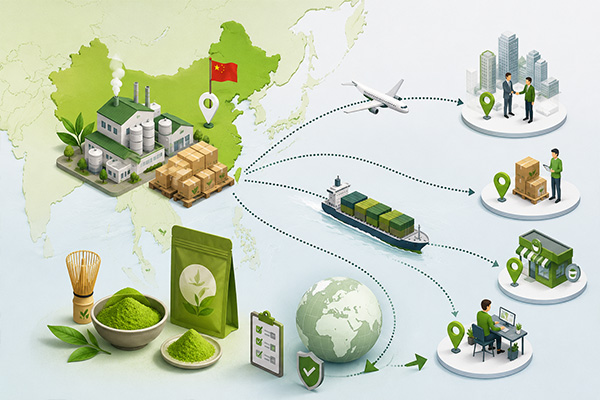
Sourcing bulk matcha for cafés, food and beverage brands, distributors, and private label companies requires careful planning and knowledge. Choosing the right supplier affects product quality, cost efficiency, supply stability, and brand positioning. Unlike consumer-level matcha purchases, B2B buyers must evaluate multiple factors including grade, batch consistency, documentation, certifications, packaging, and logistics before committing to a bulk order.
This guide will provide a step-by-step framework to help you make informed decisions when purchasing matcha in bulk for commercial applications. Whether you are sourcing latte-grade matcha for a café chain, culinary-grade matcha for bakeries, or ingredient-grade matcha for supplements and functional foods, understanding the key considerations will help ensure your product success.
Why Bulk Matcha Procurement Requires a Guide
Bulk matcha is not a one-size-fits-all ingredient. Different grades and processing methods directly impact taste, color, texture, solubility, and performance in beverages, baked goods, and ready-to-drink products. Selecting an unsuitable grade can lead to poor product performance, inconsistency across batches, wasted cost, and customer dissatisfaction.
B2B buyers must also consider:
- Minimum order quantities (MOQ) and pricing tiers
- Supplier reliability and production capacity
- Compliance with local import regulations and international certifications
- Packaging and logistics that protect freshness and appearance
- Private label and custom blending capabilities for brand development
A well-prepared buying guide ensures your procurement process is efficient, cost-effective, and aligned with your product goals.
Step 1: Identify the Right Matcha Grade
The first step in bulk purchasing is selecting the appropriate grade for your application. Matcha comes in various grades, each suited for specific uses:
| Application | Recommended Grade | Key Factors |
|---|---|---|
| Café Lattes | Grade Latte | Bright green color, smooth taste, good milk compatibility |
| Premium Beverages | Grade de cérémonie | Fine powder, rich aroma, vibrant color |
| Baking & Desserts | Grade culinaire | Stable flavor and color, cost-effective |
| Boissons prêtes à boire | Ingredient/Beverage Grade | Solubility, batch consistency, stability |
| Supplements & Functional Powders | Ingredient Grade | Specification control, clean-label compliance |
| Private Label / Retail | Custom Blend | Taste, packaging, branding, market positioning |
A professional supplier will ask for your product specifications, target market, order volume, and desired packaging before recommending a grade.
Step 2: Evaluate Quality Beyond Color
While vibrant green color is often an indicator of quality, it is not the only factor. B2B buyers should consider:
- Parfum: Fresh, grassy, or roasted notes depending on the grade
- Goût: Balanced umami, bitterness, and astringency
- Texture: Fineness affects solubility and mouthfeel
- Moisture: Excess moisture can affect shelf life
- Cohérence des lots: Essential for repeat orders and brand reliability
Suppliers should provide sample testing so you can evaluate performance in your intended application: hot lattes, iced beverages, bakery products, or RTD drinks. For example, latte-grade matcha should maintain color and texture when mixed with dairy or plant-based milk, while culinary-grade matcha must withstand heat in baking or cooking.
Step 3: Review Certifications and Documentation
Documentation is critical for compliance and quality assurance:
- Certificate of Analysis (COA)
- Product specification sheet
- Heavy metal and pesticide tests
- Microbiological testing
- Organic certifications (USDA, EU, JAS)
- Shelf life and storage recommendations
- Export and shipping documentation
For international imports, it’s essential to understand local regulations. Organic or certified matcha also requires proper documentation for labeling and legal compliance. Reliable suppliers should provide access to these documents and support your quality audits.
Step 4: Consider Supply Stability
One-off samples are insufficient to assess supplier reliability. Bulk buyers should ensure:
- Proven sourcing channels for raw tea leaves
- Capacity to fulfill repeat orders consistently
- Effective quality control across batches
- Inventory management and lead time transparency
Batch consistency is critical for product launch schedules and brand reliability. Suppliers should offer insights on seasonal variations, harvest timing, and quality control procedures to ensure uninterrupted supply.
Step 5: Analyze Price, MOQ, and Total Cost
Bulk matcha cost is influenced by multiple factors:
- Grade selection
- Certifications and testing
- Packaging type and customization
- Minimum order quantity (MOQ)
- Shipping methods and volumes
- Batch stability and supplier support
Rather than focusing solely on price per kilogram, B2B buyers should evaluate total cost considering quality, compliance, and long-term supply. For example, using ceremonial-grade matcha for lattes may increase cost without delivering practical benefits, whereas latte-grade matcha meets color, taste, and milk compatibility needs at lower cost.
Step 6: Assess Packaging Options
Packaging impacts freshness, shelf life, and brand positioning. Bulk packaging options may include:
- 1kg–10kg aluminum foil bags
- Stand-up pouches
- Tin cans for retail or café usage
- Stick packs or sachets
- Private label packaging or branded kits
High-quality packaging protects the matcha from light, heat, moisture, and oxygen. Nitrogen-flushed packaging and clear shelf life instructions can preserve powder quality during storage and shipping.
Step 7: Private Label & OEM Capabilities
Private label buyers need suppliers who can:
- Customize blends and flavor profiles
- Support packaging design and labeling
- Offer small batch sampling for testing
- Provide export-ready documentation
- Support full-scale production for retail launch
Suppliers with OEM experience reduce development time and help bring products to market efficiently.
Step 8: Logistics & International Shipping
International B2B buyers should confirm:
- Export-ready packaging and palletization
- Air, sea, or express shipping options
- Export documentation support (invoice, packing list, certificates)
- Communication with your freight forwarder
- Lead times for production and shipment
A supplier with strong logistics experience ensures timely and predictable delivery, minimizing supply chain risk.
Step 9: Avoid Common Procurement Mistakes
- Choosing suppliers based only on the lowest price
- Ignoring batch consistency or sample testing
- Overlooking certifications, COA, or import documentation
- Selecting suppliers without private label or export experience
Evaluating suppliers on multiple factors ensures long-term product quality, brand consistency, and cost efficiency.
Bulk Matcha Supplier Checklist
Before confirming an order, consider:
| Item | Key Questions |
|---|---|
| Grade & Application | Which grade is suitable for my product? |
| Batch Quality | Are sample batches consistent in color, taste, and texture? |
| Documentation | COA, certification, testing, import-ready documents? |
| Emballage | Does packaging protect freshness and align with branding? |
| MOQ | Is the minimum order quantity practical for my business? |
| Coût | What is total landed cost including shipping and packaging? |
| Supply Stability | Can the supplier meet repeat orders reliably? |
| Label privé | Can the supplier support branding, custom blending, and labeling? |
| Logistics | Does the supplier provide export and shipping support? |
| Risk Mitigation | Are there red flags or compliance gaps? |
Conclusion & CTA
Purchasing bulk matcha requires a strategic approach. The right supplier ensures:
- Grade and application fit
- Batch consistency and quality assurance
- Proper certifications and compliance
- Packaging, private label, and OEM support
- Cost efficiency and reliable logistics
Bulk matcha sourcing is more than just price. Selecting a reliable partner will protect your product quality, brand reputation, and long-term supply stability.
Next Steps:
If you want to source high-quality bulk matcha with support for private label, packaging, and international logistics, contact our team to request samples, compare matcha grades, and get a tailored quotation for your business.