
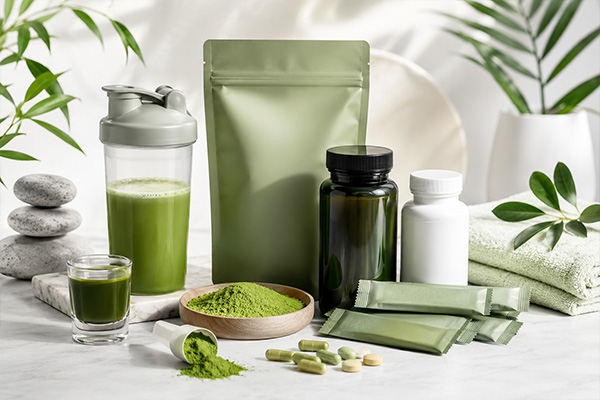
Matcha is becoming an attractive ingredient for supplement and wellness brands because it connects naturally with modern consumer interests: plant-based routines, clean-label products, natural energy, daily rituals, and premium green nutrition concepts.
For wellness brands, matcha is not only a tea powder. It can be used as a hero ingredient, a supporting ingredient, a flavor direction, a color element, or a daily-use lifestyle product. It can appear in powders, sachets, functional blends, smoothie mixes, greens products, collagen blends, protein drinks, wellness kits, and private label matcha products.
However, wellness brands must use matcha carefully. The supplement and wellness market is highly sensitive to claims, labeling, compliance, ingredient compatibility, and consumer trust. A good matcha product should feel natural and attractive, but it should not rely on exaggerated health promises.
This guide explains how supplement and wellness brands can use matcha in product development, how to position matcha safely, and what to consider before sourcing matcha powder for wellness-focused products.
Why Matcha Fits Wellness Brand Positioning
Matcha fits the wellness market because it already has a strong consumer association with daily routines, green nutrition, calm focus, natural caffeine, tea culture, and mindful lifestyle.
For supplement and wellness brands, matcha can support product concepts such as:
- Daily green tea powder
- Morning wellness routine
- Matcha energy blend
- Poudre pour smoothie au matcha
- Matcha latte mix
- Greens and superfood blend
- Plant-based drink mix
- Clean-label beverage powder
- Matcha collagen blend
- Matcha protein drink concept
- Matcha sachets for office or travel
- Wellness gift kit or starter kit
Unlike many supplement ingredients, matcha is easy for consumers to understand visually. Its green color, tea origin, and preparation style make it suitable for wellness storytelling.
But the key is to position matcha responsibly. It should be presented as a tea-based ingredient for daily lifestyle use, not as a medical solution.
Matcha as a Wellness Ingredient: Three Strategic Roles
Supplement and wellness brands can use matcha in different ways. Before choosing a grade or packaging format, decide what role matcha will play in your product.
1. Matcha as the Main Product
In this model, matcha is the hero ingredient.
Examples:
Organic Matcha Powder
Daily Matcha Sachets
Premium Matcha Latte Powder
Matcha Starter Kit
This works well when your brand wants to build a clean, simple product around matcha itself.
Idéal pour :
- Marques de bien-être
- E-commerce brands
- Organic product lines
- Café-at-home brands
- Lifestyle supplement brands
Main focus:
- Catégorie de matcha
- Goût
- Couleur
- Emballage
- Preparation experience
- Repeat purchase
2. Matcha as a Functional Blend Ingredient
In this model, matcha is one part of a larger formula.
Examples:
Matcha + collagen blend
Matcha + protein powder
Matcha + greens blend
Matcha + mushroom blend
Matcha + fiber drink mix
This works well when matcha supports flavor, color, and positioning while other ingredients create the formula structure.
Idéal pour :
- Marques de suppléments
- Nutrition brands
- Functional beverage brands
- Powder blend companies
- Wellness product developers
Main focus:
- Ingredient compatibility
- Taste masking
- Caffeine level
- Powder blending
- Claims control
- Formula cost
3. Matcha as a Lifestyle Extension
In this model, matcha is used to expand a wellness brand into a daily ritual product.
Examples:
Morning matcha kit
Matcha latte bundle
Wellness routine box
Travel sachet pack
Seasonal matcha gift set
This works well for brands that already sell supplements, beauty products, protein powders, or wellness accessories and want to add a daily-use product.
Idéal pour :
- Beauty and wellness brands
- E-commerce wellness stores
- Subscription boxes
- Lifestyle brands
- Retail wellness channels
Main focus:
- Brand experience
- Emballage
- Product education
- Bundling
- Giftability
- Customer retention
Wellness Product Concepts Using Matcha
Matcha can be developed into several product concepts depending on the brand’s customer base.
Daily Matcha Powder
This is a simple matcha product for customers who want to prepare matcha at home.
Possible formats:
- 50g pouch
- 100g pouch
- 30g tin
- 250g family-size pouch
- Organic matcha pouch
Idéal pour :
- Direct-to-consumer brands
- Clean-label wellness stores
- Tea and lifestyle brands
- Premium retail channels
Product angle:
A simple green tea powder for daily matcha routines.
Matcha Latte Powder
This is a more approachable format for customers who prefer milk-based drinks.
Possible formats:
- Matcha latte pouch
- Sachets individuels
- Sachets individuels
- Bulk foodservice pouch
- Plant-based latte mix
Idéal pour :
- Café-at-home brands
- Wellness beverage brands
- E-commerce stores
- Subscription products
Product angle:
An easy matcha latte mix for hot or iced drinks.
Matcha Greens Blend
Matcha can be combined with greens powders, vegetable powders, or plant-based ingredients.
Possible formats:
- Greens powder pouch
- Sachets individuels
- Superfood blend
- Smoothie powder
- Daily drink mix
Idéal pour :
- Marques de suppléments
- Marques de bien-être
- Functional food brands
- Online health retailers
Product angle:
A plant-based green powder blend for daily wellness routines.
Matcha Protein or Collagen Blend
Matcha can support flavor and positioning in protein or collagen powders.
Possible formats:
- Matcha collagen powder
- Mélange protéiné au matcha
- Beauty wellness drink mix
- Sachets
- Shaker-friendly powder
Idéal pour :
- Beauty-from-within brands
- Sports nutrition brands
- Women’s wellness brands
- E-commerce supplement brands
Product angle:
A matcha-flavored wellness powder with protein or collagen support.
Use careful wording. Avoid medical or disease-related claims.
Matcha Sachets for Convenience
Single-serve sachets are useful for busy consumers who want portion control.
Possible formats:
- Pure matcha sachets
- Matcha latte sachets
- Matcha blend sachets
- Travel packs
- Office packs
Idéal pour :
- Subscription boxes
- Corporate wellness
- Travel-friendly brands
- E-commerce bundles
- Retail trial products
Product angle:
Convenient single-serve matcha for daily routines.
Product Concept Matrix for Wellness Brands
| Brand Type | Suitable Matcha Concept | Best Format | Positioning Focus |
|---|---|---|---|
| Organic wellness brand | Organic matcha powder | 100g pouch | Clean-label and organic lifestyle |
| Marque de compléments alimentaires | Matcha greens blend | Powder pouch or sachets | Daily green drink routine |
| Beauty brand | Matcha collagen blend | Pouch or stick pack | Beauty wellness ritual |
| Protein brand | Matcha protein powder | Tub or pouch | Smooth matcha flavor direction |
| Lifestyle brand | Matcha starter kit | Box set | Ritual and gift experience |
| E-commerce brand | Matcha latte pouch | 100g pouch | Café-at-home convenience |
| Retail wellness store | Matcha sachets | Box or pouch | Easy trial and repeat use |
| Functional beverage brand | Matcha drink mix | Sachet or pouch | Ready-to-mix beverage concept |
This table can help brands choose a concept that fits their existing product line instead of copying generic matcha products.
Choosing the Right Matcha Grade for Wellness Products
The right matcha depends on the product concept, target customer, usage format, and price point.
Matcha biologique
Matcha bio is often the best fit for wellness brands that focus on clean-label, natural, premium, or organic positioning.
Idéal pour :
- Organic matcha powder
- Wellness pouches
- Natural food stores
- Organic smoothie blends
- Premium e-commerce products
Main advantage:
- Stronger fit for wellness brand storytelling
- Suitable for organic or natural retail channels
- Useful when certification matters to buyers
Matcha de qualité Latte
Latte grade matcha works well in milk-based wellness drinks and matcha latte powders.
Idéal pour :
- Matcha latte mixes
- Plant-based matcha drinks
- Café-at-home products
- Smoothie powders
- Powdered drink blends
Main advantage:
- Good color and taste in milk or plant-based drinks
- More approachable for daily consumers
- Practical balance between quality and cost
Matcha culinaire
Culinary matcha can work in blends where matcha is one of several ingredients and strong flavor is needed.
Idéal pour :
- Greens blends
- Functional powder mixes
- Protein blends
- Bakery-style wellness products
- Sweetened formulas
Main advantage:
- Stronger flavor presence
- Better cost control for blended formulas
- Useful when combined with other ingredients
Matcha de cérémonie
Ceremonial matcha is suitable for premium wellness products where the product is matcha-focused and the brand can support a higher price point.
Idéal pour :
- Premium matcha tins
- Ritual-focused products
- High-end gift kits
- Premium tea wellness lines
Main advantage:
- Better drinking experience
- Premium story
- Suitable for higher-end customers
Matcha in Supplement-Style Formulas: What to Consider
When matcha is used in a supplement-style formula, brands should consider more than taste and color.
Caffeine Level
Matcha naturally contains caffeine. Brands should consider this when developing products for daily use, evening use, sensitive consumers, or combination formulas.
Questions to ask:
How much matcha is used per serving?
What is the expected caffeine level per serving?
Will the product be used in the morning or throughout the day?
Will other caffeine-containing ingredients be included?
The product label and usage instructions should be clear.
Flavor Compatibility
Matcha can pair well with:
- Vanilla
- Coconut
- Oat milk
- Chocolat
- Mint
- Strawberry
- Banana
- Greens blends
- Dairy or plant-based creamers
Matcha may be harder to balance with:
- Strong bitter botanicals
- Very acidic fruit flavors
- High-mineral formulas
- High-protein systems without flavor adjustment
Powder Texture and Mixing
For powder blends, check:
- Finesse
- Flowability
- Clumping
- Reconstitution
- Mouthfeel
- Uniform blending
- Moisture sensitivity
A wellness powder may look good in a jar, but if it clumps or tastes gritty, customers may not reorder.
Ingredient Interaction
When matcha is combined with other ingredients, test the full formula. Do not judge matcha only in water.
Test matcha with:
- Protein
- Collagen
- Fiber
- Greens powders
- Mushroom powders
- Sweeteners
- Creamers
- Flavors
- Electrolytes
- Plant-based milk powders
The final blend matters more than the dry matcha sample alone.
Claims and Compliance: Use Responsible Wellness Language
Wellness brands must be careful with product claims. Matcha can support attractive positioning, but exaggerated claims can create compliance risk and reduce buyer trust.
Safer Positioning Examples
Brands can use wording such as:
- Daily matcha routine
- Plant-based green tea powder
- Naturally caffeinated green tea
- Clean-label drink mix
- Poudre pour latte au matcha
- Green tea powder for smoothies and drinks
- Designed for modern wellness routines
- Suitable for hot, iced, or blended drinks
- A simple way to enjoy matcha at home
Avoid Risky Claims
Avoid claims that suggest matcha can treat, cure, or prevent medical conditions.
Avoid wording such as:
Cures anxiety
Burns fat fast
Detoxes the body
Treats diabetes
Prevents disease
Balances hormones
Boosts immunity against illness
Guarantees weight loss
For B2B wellness brands, responsible wording is important because retailers, platforms, and importers may review product claims before approving the product.
Claim Review Checklist
| Claim Area | What to Check |
|---|---|
| Energy | Avoid overstating stimulation or performance |
| Poids | Avoid guaranteed weight loss claims |
| Detox | Avoid medical detox language |
| Immunity | Avoid disease prevention claims |
| Mental focus | Use careful, non-medical wording |
| Organic | Use only with valid certification |
| Clean label | Make sure ingredient list supports the claim |
| Caffeine | Provide clear usage guidance if needed |
Packaging Formats for Supplement and Wellness Brands
Wellness products often rely on packaging that communicates trust, routine, and convenience.
Stand-Up Pouches
Good for:
- Poudre de Matcha
- Poudre pour latte au matcha
- Greens blend
- Smoothie powder
- Matcha bio
Advantages:
- Lightweight
- E-commerce friendly
- Lower packaging cost than rigid containers
- Good for 50g–500g products
Stick Packs and Sachets
Good for:
- Daily matcha routine
- Trial packs
- Office use
- Travel packs
- Subscription boxes
Advantages:
- Convenient
- Portion-controlled
- Easy to sample
- Good for premium positioning
Tubs and Jars
Good for:
- Protein blends
- Collagen blends
- Greens powders
- Larger serving-size products
Advantages:
- Strong supplement shelf presence
- Familiar to nutrition customers
- Good for scoop-based products
Tins
Good for:
- Premium matcha
- Gift products
- Ritual-focused brands
- Specialty tea and wellness lines
Advantages:
- Premium feel
- Strong gift appeal
- Better perceived value
Kits and Bundles
Good for:
- Starter kits
- Wellness routine boxes
- Matcha + whisk bundles
- Matcha + smoothie bundle
- Seasonal gift packs
Advantages:
- Higher average order value
- Strong customer education
- Suitable for e-commerce and gifting
Developing a Wellness Matcha Product Line
A supplement or wellness brand can start with one matcha concept and expand into a product line over time.
Example Product Line Path
| Stage | Product | Purpose |
|---|---|---|
| First launch | Organic matcha pouch | Simple hero product |
| Second SKU | Poudre pour latte au matcha | More approachable daily drink |
| Third SKU | Matcha sachets | Convenience and trial format |
| Fourth SKU | Matcha collagen or protein blend | Cross-category expansion |
| Fifth SKU | Matcha starter kit | Bundle and gift opportunity |
This allows the brand to expand gradually without launching too many products at once.
Another Product Line Path
For a supplement brand:
| Stage | Product | Purpose |
|---|---|---|
| First launch | Matcha greens blend | Fits existing supplement audience |
| Second SKU | Matcha sachets | Improves convenience |
| Third SKU | Matcha latte mix | Attracts broader consumers |
| Fourth SKU | Organic pure matcha | Adds clean-label hero product |
| Fifth SKU | Seasonal matcha bundle | Supports campaigns |
The best product line path depends on existing customers, sales channel, and brand positioning.
How to Validate Matcha Products Before Launch
Before bulk production, wellness brands should test matcha in real-use conditions.
Sensory Testing
Check:
- Goût
- Parfum
- Couleur
- Bitterness
- Mouthfeel
- Aftertaste
- Customer preference
Application Testing
Test matcha in:
- Water
- Milk
- Oat milk
- Smoothies
- Protein shakes
- Collagen blends
- Greens powders
- Sachet format
Packaging Testing
Check:
- Moisture protection
- Scoop usability
- Sachet filling
- Powder flow
- Label space
- Storage instructions
- E-commerce shipping durability
Market Testing
Before full launch, test:
- Product name
- Price point
- Product photos
- Landing page messaging
- Customer education
- FAQ
- Sample feedback
Wellness products often depend strongly on customer trust and repeat use, so early feedback is valuable.
Case Example: Wellness Brand Adding Matcha to a Product Line
A wellness brand already sold collagen powder and greens blends. The brand wanted to add matcha because customers were asking for a morning drink option.
At first, the brand considered launching a pure ceremonial matcha tin. After reviewing its customer base, the team realized most customers preferred easy drink mixes over traditional tea preparation.
The brand chose to develop:
Matcha Collagen Latte Powder
The product used matcha as the flavor and lifestyle direction, while collagen remained familiar to the brand’s existing audience.
The development process focused on:
- Matcha taste in milk and oat milk
- Sweetness balance
- Powder texture
- Caffeine level awareness
- Clean label positioning
- Pouch packaging
- Clear preparation instructions
After launch, the brand added single-serve sachets for travel and subscription customers.
This case shows that wellness brands do not need to copy traditional matcha products. They should build matcha concepts that fit their existing audience.
Case Example: Organic Store Developing a Matcha Wellness Line
An organic retail brand wanted to introduce matcha into its product range. Instead of starting with multiple products, it began with one simple SKU:
Organic Matcha Powder 100g Pouch
The product was positioned for daily drinks, smoothies, and home matcha lattes. The label focused on simple ingredients and preparation guidance.
After customer demand grew, the brand added:
Organic Matcha Sachets
Organic Matcha Latte Mix
Matcha Starter Kit
This step-by-step approach allowed the brand to test demand before investing in more packaging formats.
Common Mistakes Wellness Brands Should Avoid
Mistake 1: Making Overstated Health Claims
Wellness brands should avoid medical claims and exaggerated promises. Responsible wording is safer and more credible.
Mistake 2: Choosing Matcha Only by Color
Color matters, but taste, caffeine level, blending performance, and formula compatibility are also important.
Mistake 3: Ignoring Caffeine
Matcha naturally contains caffeine. Brands should consider serving size, usage instructions, and customer expectations.
Mistake 4: Copying Generic “Superfood” Products
A stronger product should fit your brand’s customer base, not just copy market trends.
Mistake 5: Launching Too Many Wellness SKUs
Start with one product that fits your audience, then expand based on feedback.
Mistake 6: Not Testing in the Final Formula
Matcha behaves differently in protein blends, collagen, greens powders, smoothies, and latte mixes. Always test the final product.
How MatchaOEMFactory Supports Supplements and Wellness Brands
MatchaOEMFactory helps supplement and wellness brands develop matcha products for clean-label, lifestyle, and functional beverage concepts.
We support:
- Organic matcha for wellness and clean-label product lines
- Latte-grade matcha for matcha latte powders and drink mixes
- Culinary matcha for blended formulas and cost-efficient applications
- Ceremonial matcha for premium wellness products
- Matcha samples for formula and application testing
- Matcha solutions for sachets, pouches, tins, tubs, and kits
- Assistance pour la création de mélanges de matcha sur mesure
- Options d'emballage pour les marques de distributeur
- Prise en charge des certificats d'origine et des spécifications
- MOQ and product line planning
- Documentation prête à l'exportation
- Assistance pour les commandes récurrentes
Our team can help wellness brands choose matcha based on product concept, target customer, packaging format, claims strategy, and long-term supply needs.
Suggested internal links:
Matcha biologique
Matcha sous marque de distributeur
Créez une gamme de produits au matcha pour votre marque
Certificat d'analyse (COA) pour la poudre de matcha : ce que les acheteurs doivent vérifier
Foire aux questions
Can matcha be used in supplement products?
Yes. Matcha can be used in powder blends, sachets, drink mixes, greens powders, protein blends, collagen products, and wellness kits. The final formula should be tested for taste, texture, and labeling needs.
What matcha grade is best for wellness brands?
Organic matcha is often suitable for wellness and clean-label positioning. Latte grade is useful for drink mixes, culinary grade can work in blended formulas, and ceremonial grade can support premium products.
Can matcha be combined with protein or collagen?
Yes. Matcha can be used as a flavor and positioning ingredient in protein or collagen blends, but the full formula should be tested for taste, texture, sweetness, and powder mixing.
Does matcha contain caffeine?
Yes. Matcha naturally contains caffeine. Brands should consider serving size, product timing, and label communication when developing wellness products.
Can wellness brands make health claims about matcha?
Brands should avoid disease, treatment, cure, or guaranteed result claims. Use responsible lifestyle and product-use language instead.
Can MatchaOEMFactory support private label wellness products?
Yes. MatchaOEMFactory supports matcha powder, drink mixes, sachets, pouches, tins, kits, and custom blending for supplement and wellness brands.
Ready to Develop Matcha Products for Your Wellness Brand?
Matcha can help supplement and wellness brands create clean, modern, and lifestyle-focused products for daily routines. The key is to choose the right concept, grade, format, and wording for your target market.
MatchaOEMFactory supports wellness brands with matcha samples, grade recommendations, custom blending, private label packaging, documentation, and repeat supply planning.
Share your product concept, target customer, preferred format, and market requirements. Our team can help you compare matcha options and prepare a tailored quotation.